Industrial steel buildings are commonly used for factories, warehouses, workshops and commercial operations. However, without proper ventilation, heat and humidity can build up inside these structures, making the working environment uncomfortable.
Industrial steel building ventilation can be improved through proper roof design, monitor roof systems, turbo ventilators and well-planned air inlets. The right combination depends on the building’s size, layout, location and activities carried out inside.
For businesses in Kerala, ventilation planning is particularly important because of the region’s warm and humid climate.
Why Is Ventilation Important in Industrial Steel Buildings?
Ventilation helps maintain airflow by allowing warm indoor air to escape and fresh outdoor air to enter.
In industrial buildings, heat may come from sunlight, machinery, manufacturing activities and daily operations. When this heat remains trapped inside, indoor temperatures can rise.
Proper ventilation planning can help businesses:
- Reduce the accumulation of hot air inside the building.
- Improve air circulation across working areas.
- Support a more comfortable working environment.
- Reduce moisture buildup in suitable conditions.
- Support the performance of industrial operations.
Ventilation requirements vary depending on the building’s purpose. A warehouse storing packaged goods may need a different ventilation arrangement from a factory operating heat-generating machinery.
Common Ventilation Problems in Industrial Steel Buildings
Many industrial buildings experience ventilation problems because airflow is not properly considered during the initial planning stage.
Heat Accumulation Under the Roof
Warm air naturally rises and can collect near the roof. If there is no suitable outlet, heat may remain trapped inside the building.
Limited Fresh Air Entry
A building may have roof ventilators but still experience poor airflow if there are not enough suitable openings for fresh air to enter.
Poor Air Distribution
Large warehouses and factories may have areas where air movement is limited. Machinery, storage racks and internal partitions can also affect airflow.
High Humidity
Kerala’s humid conditions can make indoor spaces uncomfortable. Poor ventilation may also contribute to moisture-related problems in certain buildings.
Addressing these issues during the design stage can help create a more practical ventilation arrangement.
How Monitor Roof Ventilation Improves Natural Airflow
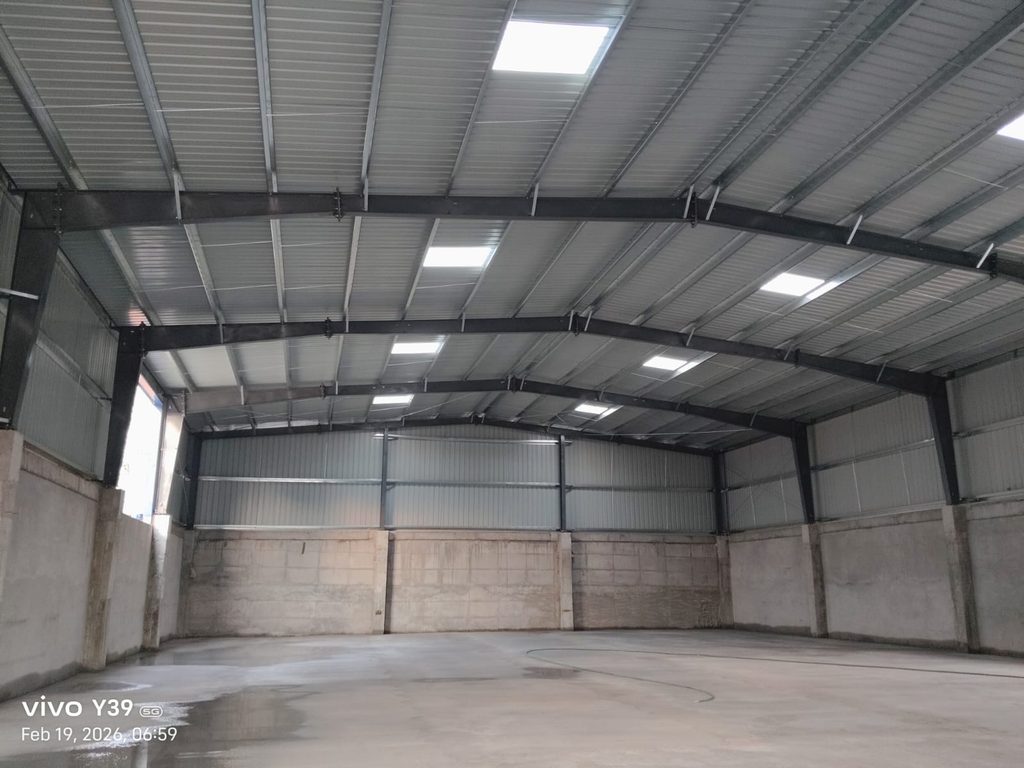
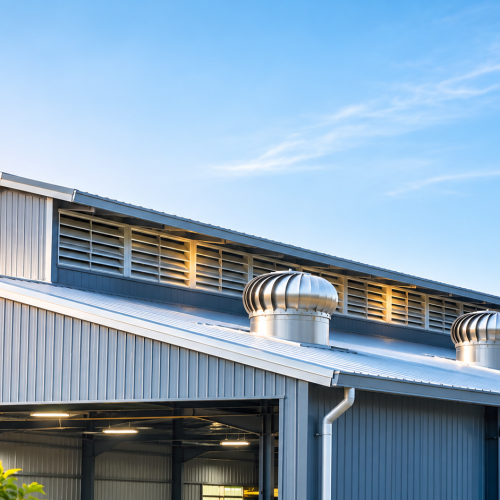
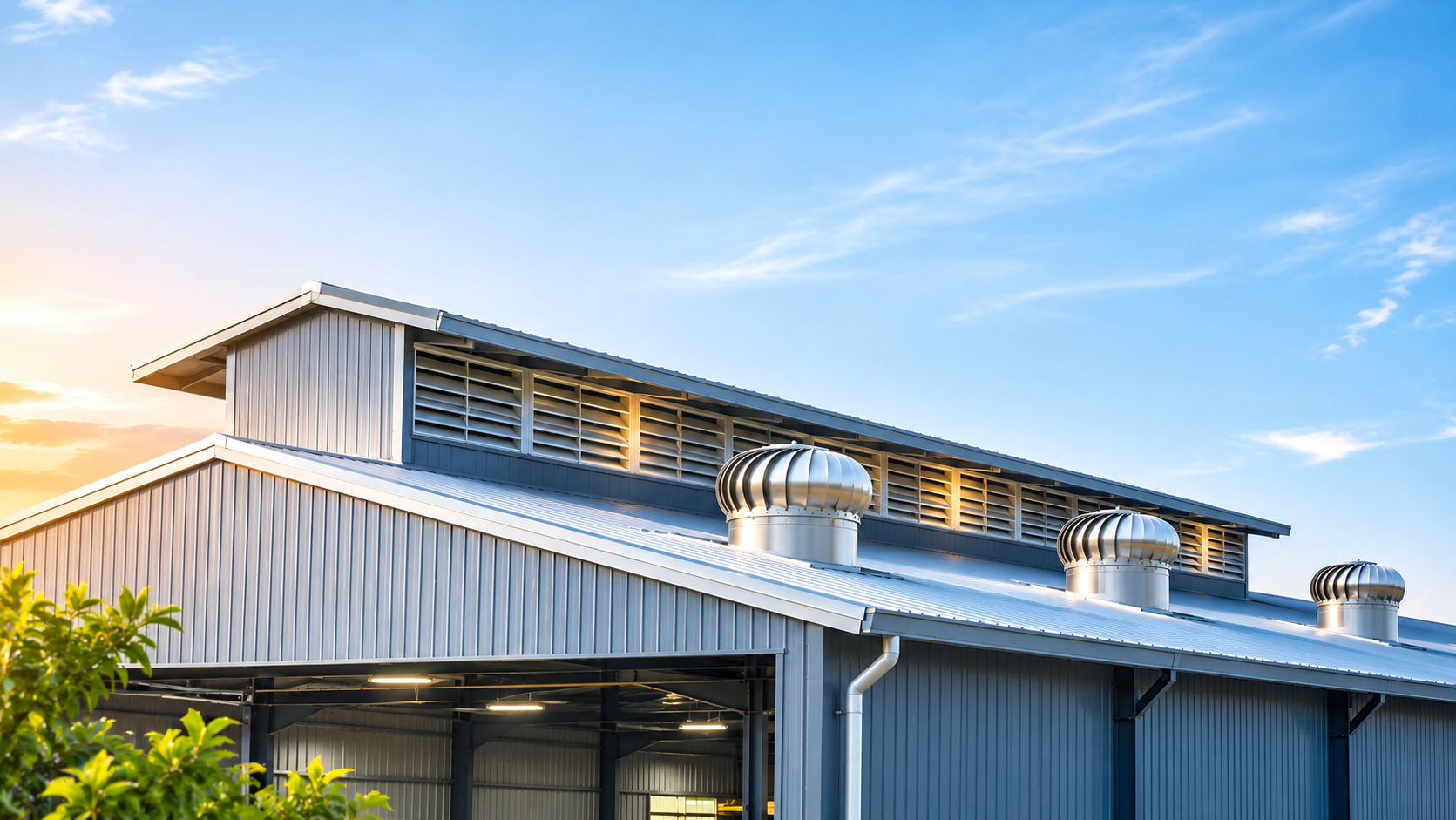
A monitor roof is a raised roof structure that incorporates ventilation openings, usually positioned along the upper portion of an industrial building.
It provides a path for warm air to escape from the higher sections of the building.
How Does a Monitor Roof Work?
As indoor air becomes warmer, it tends to rise towards the roof.
A properly designed monitor roof allows this warm air to leave through upper openings. Fresh outdoor air can then enter through suitable lower-level openings.
This natural airflow process can help reduce heat accumulation without relying entirely on mechanical ventilation.
Benefits of Monitor Roof Ventilation
- Provides high-level openings for warm air to escape.
- Supports natural ventilation in large industrial spaces.
- Can be integrated into the building’s roof design.
- May reduce reliance on powered ventilation under suitable conditions.
- Can be useful for factories, warehouses and workshops.
The performance of a monitor roof depends on factors such as opening size, building height, wind conditions and the location of air inlets.
TAPCO Smart Builders provides monitor roof solutions as part of its industrial steel building projects, helping businesses consider ventilation during building planning.
Benefits of Turbo Ventilators in Industrial Steel Buildings
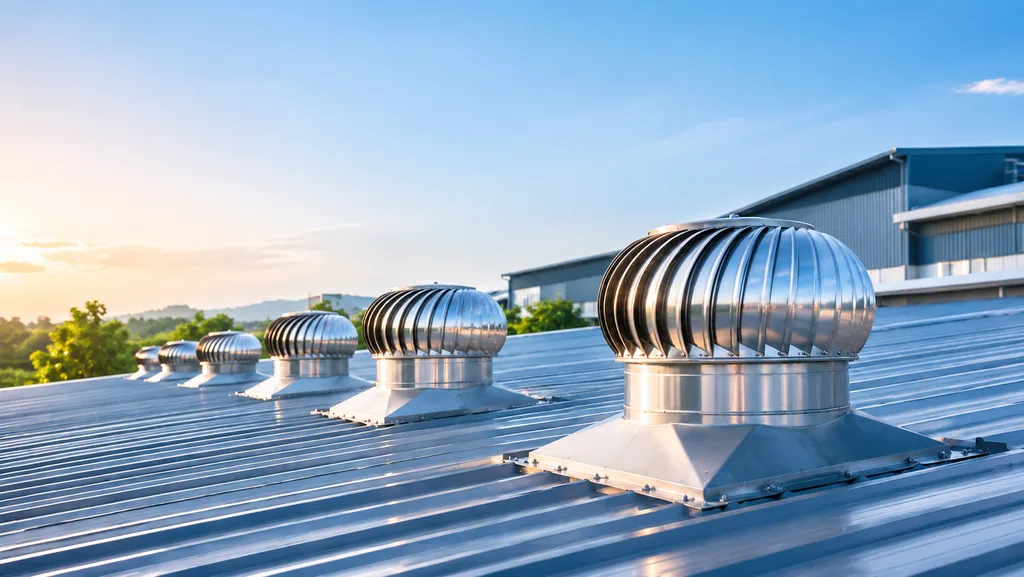
A turbo ventilator is a roof-mounted ventilation device that uses wind movement to rotate a turbine and help extract air from inside a building.
Wind-driven turbo ventilators are commonly used in industrial buildings where natural ventilation is required.
How Does a Turbo Ventilator Work?
When wind passes over the ventilator, the turbine rotates and helps draw indoor air out through the roof opening.
This can support the removal of accumulated warm air, particularly when the building has suitable fresh air inlets.
The extraction rate depends on wind speed, ventilator design and installation conditions.
Advantages of Turbo Ventilators
- Help remove warm air from upper building areas.
- Operate using wind rather than an electric motor.
- Can be installed at suitable locations on industrial roofs.
- Support natural ventilation when paired with adequate air inlets.
- Can form part of a broader ventilation strategy.
TAPCO Smart Builders offers turbo ventilator solutions for industrial steel buildings.
The number, size and placement of ventilators should be determined according to the building’s ventilation requirements rather than simply installing the same arrangement on every roof.
Monitor Roof vs Turbo Ventilator: Understanding the Difference
Monitor roofs and turbo ventilators both support ventilation, but they work in different ways.
| Feature | Monitor Roof | Turbo Ventilator |
|---|---|---|
| Design | Raised roof section with ventilation openings | Roof-mounted rotating turbine |
| Main function | Allows warm air to escape through high-level openings | Uses wind-driven rotation to assist air extraction |
| Operation | Natural airflow through openings | Primarily wind-driven |
| Suitable applications | Large factories, warehouses and industrial buildings | Factories, warehouses and workshops |
| Installation | Integrated into roof design | Installed at suitable roof locations |
| Main consideration | Opening design and airflow path | Wind conditions, capacity and placement |
Which Ventilation System Is Better?
There is no single solution that suits every industrial steel building.
A monitor roof may be suitable when a large building requires continuous high-level ventilation openings.
Turbo ventilators may be useful where roof-mounted extraction is preferred and wind conditions are suitable.
Some buildings may benefit from a combination of both systems, provided the overall airflow arrangement is properly designed.
How Building Height and Roof Design Affect Ventilation
The height and roof structure of an industrial building can influence how air moves inside it.
Building Height
Taller buildings provide more space for warm air to rise above occupied working areas. However, height alone does not guarantee good ventilation.
Suitable air inlets and outlets are still necessary.
Roof Design
The roof profile, slope and ventilation openings can affect the movement of warm air.
Monitor roof systems and turbo ventilators should be positioned with the building’s overall roof design in mind.
Fresh Air Inlets
Ventilation systems need a suitable path for replacement air.
Wall louvers, appropriately designed openings and other inlet arrangements may be considered depending on the building’s purpose.
Internal Layout
Machinery, storage racks and partitions can restrict airflow.
Considering these features during planning helps identify areas that may require additional ventilation.
Natural Ventilation vs Mechanical Ventilation in Steel Buildings
Natural ventilation uses wind and temperature differences to move air through a building.
Monitor roofs and wind-driven turbo ventilators are examples of systems that support natural ventilation.
Mechanical ventilation uses powered equipment such as exhaust fans and air-handling systems.
Natural ventilation may be suitable for certain warehouses and industrial spaces. However, factories with significant process heat, dust, fumes or other airborne contaminants may require engineered mechanical ventilation or dedicated extraction systems.
Natural ventilation should not be treated as a replacement for required industrial exhaust, dust collection or workplace safety systems.
The appropriate solution depends on the building’s operations and applicable safety requirements.
Planning Industrial Steel Building Ventilation for Kerala’s Climate
Kerala experiences warm temperatures, high humidity and seasonal heavy rainfall.
These conditions should be considered when designing ventilation systems for industrial steel buildings.
Consider Local Weather Conditions
Wind direction, surrounding buildings and seasonal weather changes can affect natural ventilation performance.
Protect Openings From Rainwater
Monitor roof openings and other ventilation features should be designed to limit unwanted rainwater entry, particularly during the monsoon season.
Combine Ventilation With Heat Control
Ventilation can help remove warm air, but it does not prevent all heat from entering through the roof.
Suitable roof insulation and other heat-control measures may also be considered.
Plan Ventilation Before Construction
Planning ventilation during the initial design stage makes it easier to coordinate roof openings, structural requirements and internal layouts.
For factories and warehouses in Kerala, an integrated approach can be more practical than selecting ventilation equipment after construction is completed.
Industrial Steel Building Ventilation Solutions by TAPCO Smart Builders
TAPCO Smart Builders works on steel building construction projects, including industrial and commercial structures.
Ventilation is an important consideration when planning buildings used for manufacturing, storage and other business activities.
TAPCO Smart Builders provides Monitor Roof and Turbo Ventilator solutions for industrial steel buildings.
These systems can be considered according to the building’s layout, roof design and ventilation needs.
If you are looking for a steel construction company in Kerala, TAPCO Smart Builders can help you discuss steel building planning and suitable ventilation options for your project.
Conclusion
Good ventilation is an important part of industrial steel building design.
Monitor roof systems, turbo ventilators, properly planned air inlets and suitable building layouts can help improve airflow and reduce the accumulation of warm air.
For factories and warehouses in Kerala, considering ventilation from the beginning can support a more comfortable and practical working environment.
Planning a new factory, warehouse or industrial steel building?
Contact TAPCO Smart Builders to discuss your project requirements and available ventilation solutions.
Frequently Asked Questions
1. What is the best way to improve ventilation in an industrial steel building?
Ventilation can be improved by providing suitable fresh air inlets and high-level outlets. Monitor roofs, turbo ventilators and mechanical systems may be considered depending on the building’s size and operations.
2. What is a monitor roof in an industrial building?
A monitor roof is a raised roof section with ventilation openings. It allows warm air to escape from upper areas and can support natural airflow through the building.
3. Do turbo ventilators require electricity?
Standard wind-driven turbo ventilators do not require electricity for turbine rotation. Their performance depends on wind conditions and the ventilation arrangement.
4. Can monitor roofs reduce heat inside factories?
Monitor roofs can help release warm air that accumulates near the roof. Their effectiveness depends on the design, outdoor conditions and availability of replacement air.
5. Are turbo ventilators suitable for warehouses in Kerala?
Turbo ventilators can be suitable for some warehouses in Kerala. Wind conditions, roof design, rain protection and required airflow should be assessed before installation.
6. Can monitor roofs and turbo ventilators be used together?
Yes, both systems may be considered in one building when their combined operation is properly designed. The arrangement should provide effective airflow without unnecessary duplication.
7. Is natural ventilation enough for an industrial factory?
Natural ventilation may be sufficient for certain applications, but it is not suitable for every industrial process. Factories producing dust, fumes or hazardous airborne substances may require dedicated mechanical extraction.
8. Does TAPCO Smart Builders provide industrial roof ventilation solutions?
Yes. TAPCO Smart Builders provides monitor roof and turbo ventilator solutions for industrial steel buildings. The suitable option depends on individual project requirements.