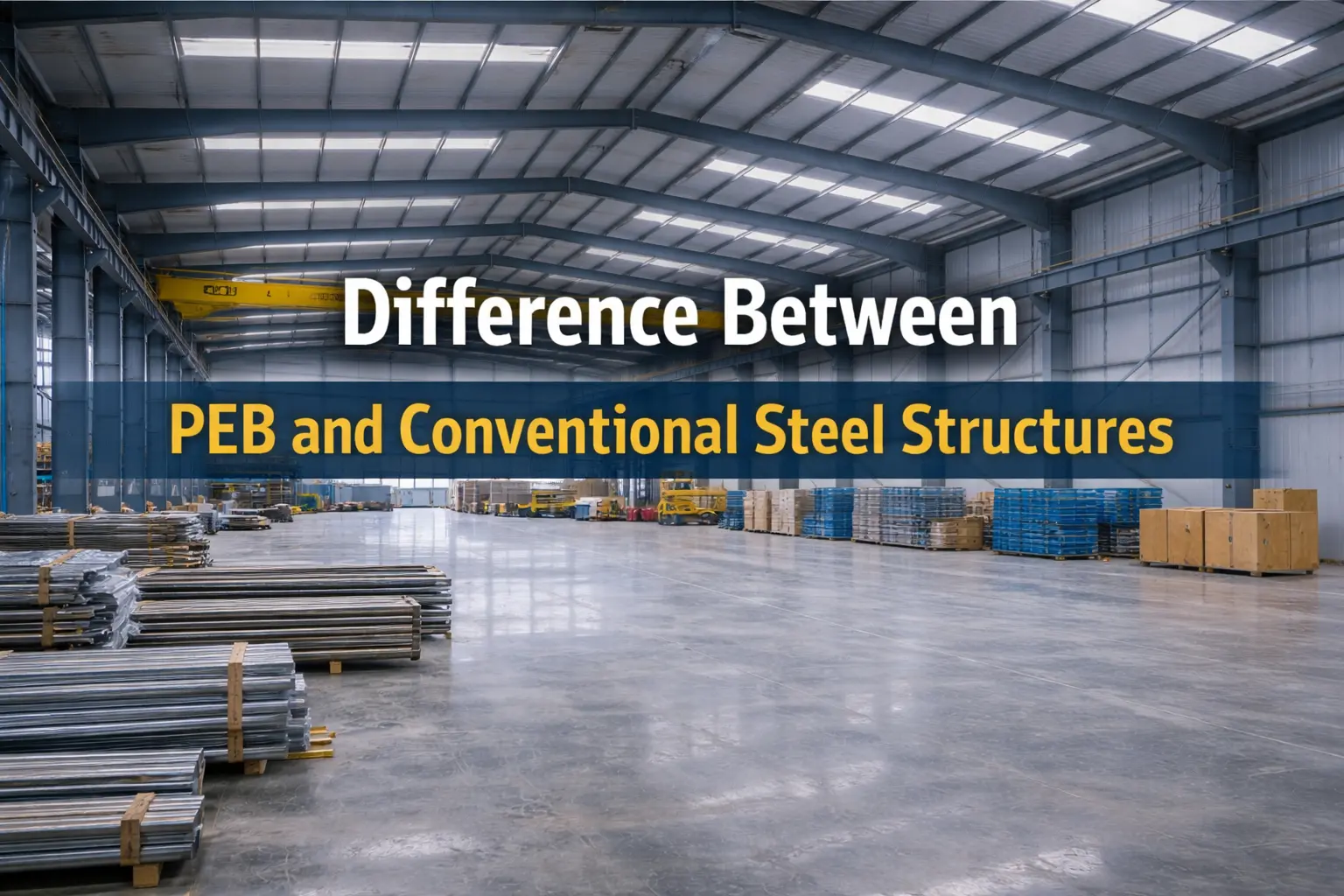
Steel construction is widely used for industrial, commercial, and warehouse buildings. Within steel construction, two common systems are Pre-Engineered Buildings (PEB) and Conventional Steel Structures. While both use steel as the primary material, their design approach, construction process, cost, and performance differ significantly.
This blog explains the difference between PEB and conventional steel structures in a clear and simple manner, helping project owners and planners choose the right system based on their requirements.
Understanding Steel Building Systems
Before comparing PEB and conventional steel structures, it is important to understand that both systems rely on steel construction as the core structural method.
You can learn more about the role of steel in modern buildings here:
👉 steel construction
The difference lies mainly in how the structure is designed, fabricated, and assembled.
What Is a Pre-Engineered Building (PEB)?
A Pre-Engineered Building (PEB) is a steel building system where all major structural components are designed, fabricated, and manufactured in a factory, and then assembled at the site.
Key characteristics of PEB:
- Standardised and optimised design
- Factory-controlled fabrication
- Faster on-site erection
- Reduced material wastage
PEB systems are widely used for industrial sheds, warehouses, logistics centres, and commercial buildings.
What Is a Conventional Steel Structure?
A conventional steel structure is a building where steel members are designed individually and fabricated based on detailed drawings, often with more manual work involved.
Key characteristics of conventional steel structures:
- Custom-designed sections
- Fabrication based on site-specific drawings
- More on-site work
- Suitable for complex or irregular designs
Conventional steel structures are commonly used for buildings requiring architectural flexibility or special structural requirements.
Design Approach: PEB vs Conventional Steel Structures
PEB Design Approach
In PEB systems:
- Design is optimised using engineering software
- Steel sections are tapered to reduce weight
- Loads are calculated precisely
- Material usage is minimised
This results in a lighter yet strong structure.
Conventional Steel Design Approach
In conventional steel structures:
- Standard steel sections are used
- Design is less optimised for weight
- Sections may be heavier than required
While strong, this approach may increase material usage and cost.
Fabrication Method Differences
Fabrication in PEB Systems
PEB components are fabricated in factories under controlled conditions. Precision fabrication ensures:
- Accurate dimensions
- Consistent quality
- Faster erection at site
Precision
👉 steel fabrication
plays a critical role in ensuring the strength and performance of PEB buildings.
Fabrication in Conventional Steel Structures
Conventional steel structures involve:
- Fabrication based on detailed drawings
- More manual cutting and welding
- Higher dependency on workmanship
Quality can vary depending on fabrication practices.
Construction Speed Comparison
PEB Construction Speed
PEB construction is significantly faster because:
- Components arrive ready for installation
- Minimal on-site fabrication
- Bolted connections speed up erection
This reduces overall project duration.
Conventional Steel Construction Speed
Conventional steel construction is slower due to:
- Extensive on-site fabrication
- Manual welding and fitting
- Higher dependency on labour
This increases construction time.
Cost Difference Between PEB and Conventional Steel Structures
Cost Efficiency of PEB
PEB systems are generally more cost-effective because:
- Optimised steel usage
- Reduced labour cost
- Faster project completion
- Lower foundation cost due to lighter structure
Cost Consideration in Conventional Steel Structures
Conventional steel structures may have:
- Higher steel consumption
- Longer construction time
- Increased labour cost
However, they may be necessary for highly customised designs.
Structural Weight and Foundation Requirements
PEB structures are lighter due to optimised sections. This results in:
- Smaller foundation size
- Reduced civil work cost
Conventional steel structures are heavier, which increases:
- Foundation size
- Construction cost
Flexibility and Future Expansion
PEB Expansion Capability
PEB buildings are easy to expand:
- Additional bays can be added
- End walls can be extended
- Minimal disruption to existing structure
Conventional Steel Expansion Challenges
Expanding conventional steel structures can be:
- Structurally complex
- Time-consuming
- Costly
This makes PEB more suitable for growing industrial operations.
Application Suitability
Where PEB Is Best Suited
PEB is ideal for:
- Industrial buildings
- Warehouses
- Logistics facilities
- Commercial sheds
PEB is widely preferred for
👉 warehouse steel construction
due to large clear spans and fast execution.
Where Conventional Steel Structures Are Preferred
Conventional steel structures are suitable for:
- Architecturally complex buildings
- Irregular layouts
- Special structural requirements
They offer greater customisation but at higher cost and time.
Maintenance Requirements
PEB buildings require:
- Periodic inspection
- Minimal maintenance
- Recoating when required
Conventional steel structures may require:
- More frequent inspection
- Higher maintenance effort
Lower maintenance makes PEB attractive for long-term use.
Quality Control and Consistency
PEB systems benefit from factory-controlled production, resulting in:
- Better quality consistency
- Fewer construction errors
Conventional steel structures depend more on site conditions and workmanship, which can affect consistency.
Life Span Comparison
Both PEB and conventional steel structures can last 30–50 years or more if properly designed and maintained.
However:
- PEB structures often perform better due to optimised design
- Conventional structures depend heavily on execution quality
Environmental Impact
PEB construction is more environmentally friendly because:
- Reduced material wastage
- Faster construction
- Recyclable steel components
Conventional steel construction generates more waste due to manual fabrication.
PEB vs Conventional Steel Structures: Comparison Table
| Feature | PEB | Conventional Steel Structure |
| Design | Optimised & standardised | Custom & detailed |
| Fabrication | Factory-controlled | Mixed or site-based |
| Construction Speed | Fast | Slow |
| Steel Consumption | Optimised | Higher |
| Expansion | Easy | Difficult |
| Maintenance | Low | Higher |
| Cost Efficiency | High | Moderate |
How to Choose the Right System
Choose PEB if:
- Fast construction is required
- Budget control is important
- Large clear spans are needed
- Future expansion is planned
Choose conventional steel structures if:
- Complex architectural design is required
- Special structural detailing is needed
Conclusion
The difference between PEB and conventional steel structures lies mainly in design approach, fabrication method, construction speed, and cost efficiency. While both systems use steel, PEB offers faster execution, optimised material usage, and easier expansion, making it ideal for industrial and warehouse projects.
Understanding these differences helps project owners select the most suitable steel construction system based on long-term requirements.