
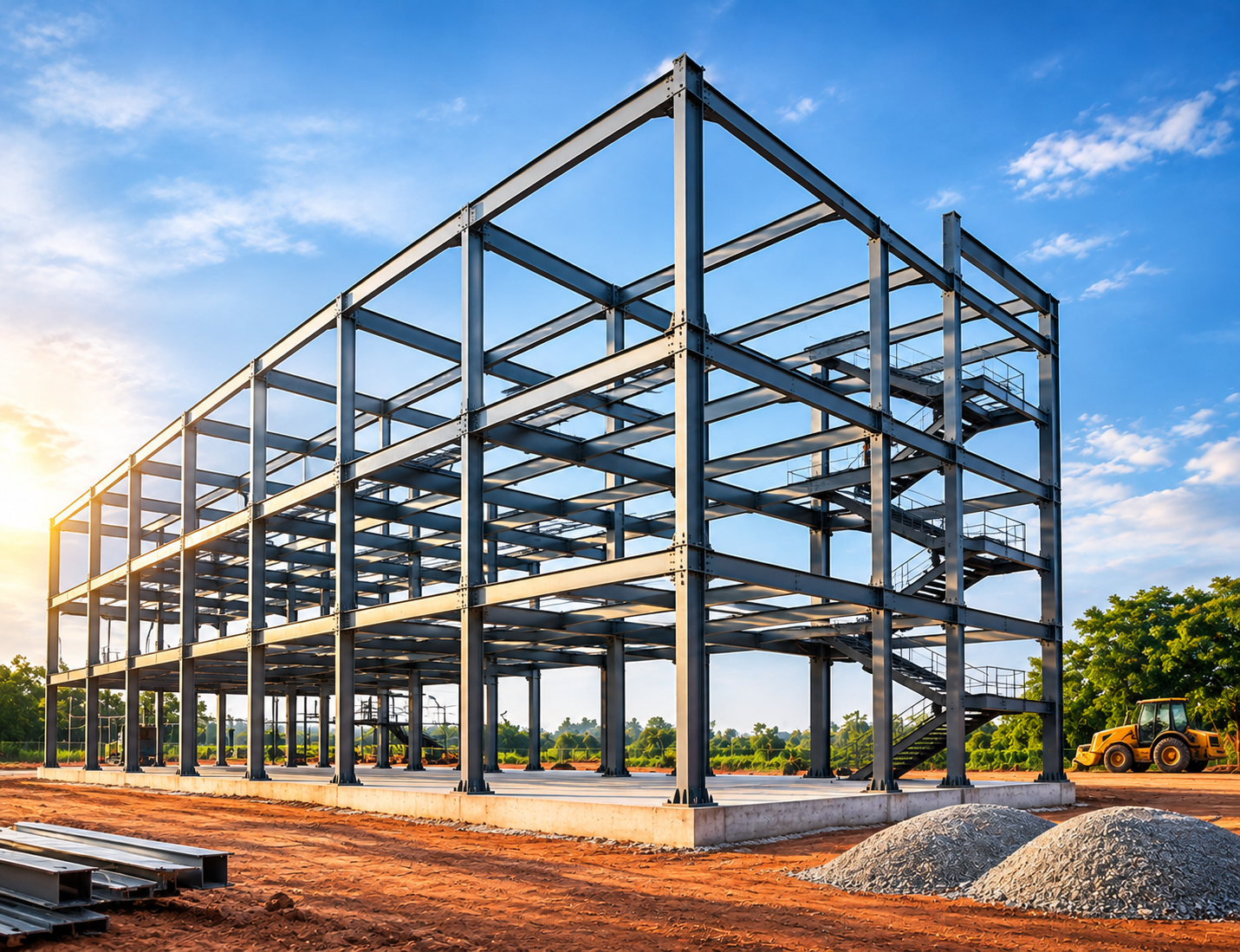
Industrial steel buildings are widely used for factories, warehouses, workshops and commercial facilities in Kerala. These buildings offer flexible spaces and can be designed to meet different business requirements. However, indoor heat can become a major concern, especially during the summer months. When a building receives direct sunlight for several hours, the roof and walls can become hot, making the working environment uncomfortable. Proper planning is important for heat reduction in steel buildings. Working with an experienced Steel Construction Company in Kerala can help building owners choose suitable roofing materials, improve ventilation and plan proper insulation to control indoor temperatures. In this blog, we explain some practical ways to reduce heat inside industrial steel buildings in Kerala. 1. Choose the Right Roofing Materials The roof is one of the main areas through which heat enters an industrial steel building. Metal roofing sheets exposed to direct sunlight can become very hot. Some of this heat is then transferred to the space below. Choosing suitable roofing materials during construction can help reduce this problem. Important factors to consider include: Light-coloured or reflective roofing materials can reduce the amount of solar heat absorbed by the roof. The right roofing system should be selected based on the building’s purpose, budget and local weather conditions. 2. Install Proper Roof Insulation Roof insulation is one of the most effective ways to reduce heat transfer into industrial buildings. Insulation materials create a barrier that slows down heat movement from the hot roof surface to the interior. Common insulation options include: Glass Wool Insulation Glass wool is used in many industrial roofing systems. It helps reduce heat transfer and can also provide sound insulation. XLPE Foam Sheet Insulation XLPE (Cross-Linked Polyethylene) foam sheets are closed-cell insulation materials used in industrial roofing applications. They help reduce heat transfer through metal roofs and also provide sound insulation and moisture resistance. XLPE foam sheets can be considered for factories, warehouses and other industrial steel buildings to improve indoor comfort. Rock Wool Insulation Rock wool offers thermal insulation and is available in products with suitable fire-resistance properties. Insulated Sandwich Panels These panels contain an insulating core between two metal sheets. They are used for roofing and wall applications where thermal performance is important. The selection and thickness of insulation depend on the building’s operating requirements. Proper installation is also important because gaps or damaged insulation can reduce its effectiveness. 3. Improve Natural Ventilation Good ventilation helps remove accumulated hot air from inside an industrial building. When hot air remains trapped near the roof, indoor temperatures can increase. A properly planned ventilation system allows fresh air to enter and warm air to escape. Common ventilation arrangements include: Natural ventilation works best when the location and size of openings are planned according to the building layout and airflow requirements. For factories and warehouses in Kerala, ventilation should also be designed to limit rainwater entry during the monsoon. 4. Consider Roof Height During Building Design Roof height can influence how heat is distributed inside a steel building. In buildings with higher ceilings, warm air may collect above the occupied working area. This can help create separation between the hottest upper air and the spaces where people work. However, increasing roof height alone does not guarantee a cooler building. The right building height depends on machinery, storage requirements, ventilation design and overall construction cost. When planning an industrial steel building, roof height should be considered together with insulation and airflow. 5. Use Suitable Wall Cladding and Insulation Heat can also enter an industrial building through its external walls. Walls that receive strong afternoon sunlight may contribute to higher indoor temperatures. Insulated wall panels can help reduce heat transfer through the building envelope. Other useful considerations include: Selecting the right wall cladding can improve indoor comfort while maintaining the building’s required appearance and functionality. 6. Plan the Building Orientation Carefully The direction in which a building faces can affect how much sunlight reaches its roof and walls. During the planning stage, it is useful to study the site’s sun exposure, wind direction and surrounding structures. Proper building orientation can help reduce unwanted solar heat gain. For example, large windows or openings facing strong afternoon sunlight may require additional shading. Building orientation should also support natural ventilation, vehicle access and daily operations. A well-planned layout can help reduce heat-related problems before construction begins. 7. Provide Shading and Reduce Direct Sunlight Direct sunlight entering through windows, doors and other openings can increase indoor heat. Providing suitable shading can help control this problem. Some practical options include: Shading is particularly useful for offices, working areas and spaces where employees spend long hours. It is important to select shading arrangements that do not affect ventilation, vehicle movement or building safety. 8. Consider Mechanical Ventilation Where Necessary Natural ventilation may not be sufficient for every industrial building. Factories with heat-producing machinery, high occupancy or specific operating conditions may require mechanical ventilation. Depending on the building’s needs, this may include exhaust fans, supply-air systems or other engineered ventilation solutions. Mechanical ventilation can help remove warm air and improve air circulation. However, ventilation is not the same as air conditioning. In hot and humid weather, additional cooling or humidity control may be needed to maintain specific indoor conditions. The system should be selected according to the building’s activities, equipment and safety requirements. 9. Maintain Roofing and Ventilation Systems Even a well-designed building requires regular maintenance. Over time, damaged roofing sheets, blocked ventilators and deteriorated insulation can affect thermal performance. Regular inspection can help identify problems early. Important maintenance activities include: For industrial steel buildings in Kerala, inspections before and after the monsoon can be particularly useful. Proper maintenance helps the building continue to perform as intended. Why Heat Reduction Should Be Planned Before Construction Heat reduction is easier to address when it is considered during the initial design stage. Adding insulation, changing ventilation arrangements or modifying the roof after construction may involve additional work and expense. Early planning allows building owners to select